Thinning Tung Oil: What Ratio, and Why It Depends on Where You Live
5 min read
Ask ten woodworkers how to thin tung oil and you'll get ten answers, most of them delivered with total confidence. The most common is 1:1, which is a fine place to start and a bad place to stop. The ratio that works depends on your wood, which coat you're on, and — this is the part that gets left out of most advice — the weather in your shop.
I've watched the same mix behave like two different products in two different states. That's not a small thing when you've got a piece that needs to ship Monday.
First, why bother thinning it
Pure tung oil is thick. Pour it and it moves like cold honey. That viscosity is a sign you've got the real thing and not a "tung oil finish" that's mostly varnish, but it also means the oil wants to sit on top of the wood instead of going into it, and a penetrating finish that doesn't penetrate is just an expensive mess to wipe off.
Cutting it with a thinner fixes that. It also speeds up cure time, because there's simply less oil per coat to oxidize, and it makes the stuff far easier to wipe on without leaving tracks.
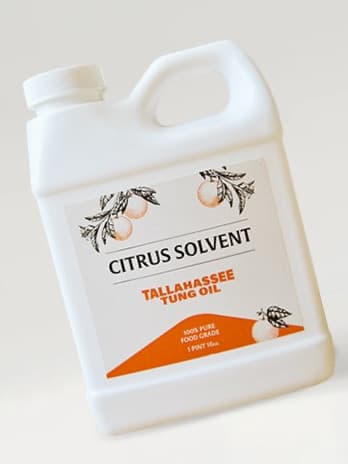
We use citrus-based thinner (d-limonene, pressed out of orange peels) and recommend it, though mineral spirits will do the same job if that's what's on your bench. The citrus version won't clear a room the way petroleum thinner does, which matters if your shop is your garage and your garage is attached to your house.
The ratios
1:1. Start here. Equal parts oil and thinner works on most woods in most places and does nothing badly. Plenty of finishers use it for every coat on every project and never touch another ratio, and their work looks great. If you want one answer and no fuss, this is it. The rest of this article is refinement.
1:2, oil to thinner. For first coats on wood that doesn't want to absorb anything — hard maple, white oak, most of the tropical stuff. Also for end grain, which drinks unevenly and will blotch on you if you don't seal it first with something thin.
This coat won't look like much. It builds essentially no film and you may wonder whether anything happened at all. Something did. It went in.
2:1, oil to thinner. After the wood's been sealed it stops drinking so hard, and you can go richer to build sheen faster. Each coat lays down more material, so you get where you're going in fewer passes.
This is also the mix for hot, dry shops. In Phoenix in July, a lean mix can flash off before it's finished traveling into the wood — the thinner's gone and the oil never made it anywhere. Richer blend, more working time.
1:2 or leaner, in the heat and humidity. Here's where people's instincts fail them.
You'd think humid air calls for more oil, not less. It's the opposite. High humidity slows oxidative cure — the oil is trying to pull oxygen out of the air and the air is full of water instead. Lay down a thick coat in an 85% July and you'll be poking at a tacky surface three days later wondering what you did wrong.
The fix is counterintuitive: cut it hard. Some guys in Hawaii and along the Gulf run as lean as 30% oil, 70% thinner. Each coat carries almost nothing, so it cures fast even in wet air, and you can keep recoating on a schedule instead of standing around. You'll put on more coats. You'll still finish sooner, and the piece will be just as tough when you're done.
If you're finishing outdoor furniture in a Southern August, this is the one.
Straight oil, nothing added. Cutting boards, utensils, butcher block, toys — anything a kid or a knife is going to touch, plenty of people want no thinner in it at all. Fair enough.
It's more work. Warm the bottle in a bowl of hot tap water for five or ten minutes first; the difference in how it flows is dramatic and most people skip this step. Apply thinner coats than you think you need to — unthinned oil laid on heavy is the single most common cause of a finish that never quite hardens. And then wait, because without thinner in the mix there's nothing to hurry it along.
Things that matter more than the ratio
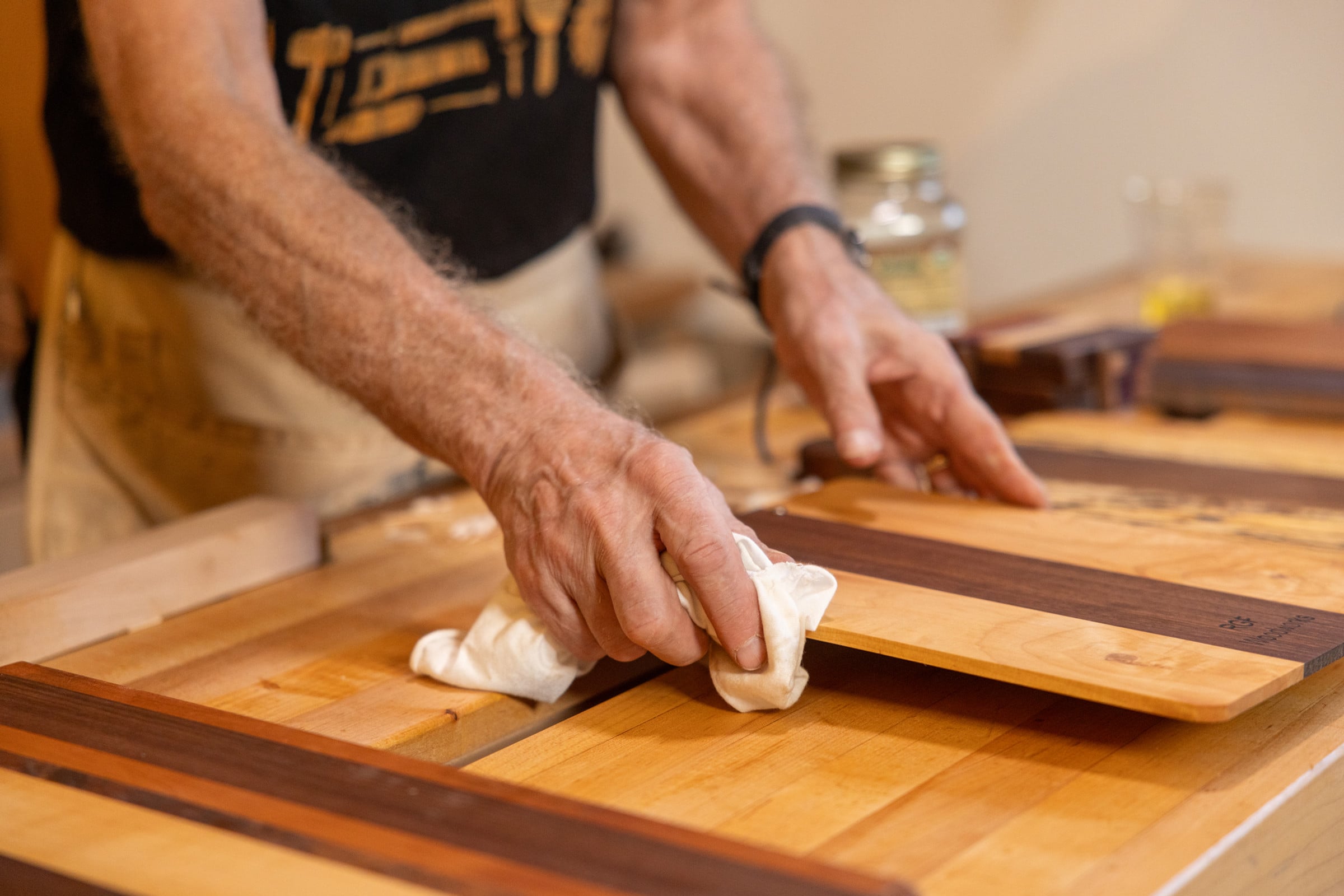
How you wipe it off. Flood the surface, let it sit fifteen or twenty minutes, then wipe off every bit that hasn't soaked in. Not most of it. All of it. Oil left standing on the surface cures into something gummy and unpleasant, and no ratio in the world will save you from a lazy wipe-down. This is the step people get wrong, and it's not close.
Thin early, thick late. Lean mixes first, richer mixes as you go. If you remember nothing else structural, remember that.
Cold kills. Below about 55 degrees the cure slows to nearly nothing, and a lot of people discover this in November when a piece that should have been ready in a day is still wet on Thursday. Warm the shop, warm the oil, and plan on waiting twice as long as you would in summer.
Air movement helps more than you'd expect. A cheap box fan pointed across the piece will pull hours off your cure time in humid weather. Costs nothing to try.
And the rags. Oil-soaked rags heat up as they cure and they will absolutely start a fire in a crumpled heap in the corner of your shop. Spread them flat outside or drop them in a bucket of water. Every drying oil, every time, no exceptions. This is not a hypothetical — shops burn down over this.
One more variable nobody mentions
Oil ages. It starts oxidizing the day it's pressed, and most tung oil sold in this country spent a long time in a shipping container and longer on a shelf before it got to you. Older oil is slower to penetrate and less predictable to cure, which means the ratios above are a moving target if you don't know what you're starting with.
We press ours here on the Gulf Coast and put the harvest date and press date on every container, so you can see for yourself. Fresh oil behaves the way the guides say it should. That's most of the reason we do it.
The short version
| Ratio (oil : thinner) | When |
|---|---|
| 1:1 | Default. Start here. |
| 1:2 | First coats, dense wood, end grain, cold or damp shops |
| 2:1 | Build coats. Hot, dry climates. |
| 1:2 to 1:3 | Hot and humid. Faster recoats. |
| Straight oil | Food surfaces. Warm it, thin coats, be patient. |
None of this is precious. Tung oil is about as forgiving a finish as exists — if a mix isn't working for your wood or your weather, change it and keep going. Worst case you wipe it back and try again, which is more than you can say for most finishes.
Working on something specific and not sure where to start? Ask us. We finish wood too.
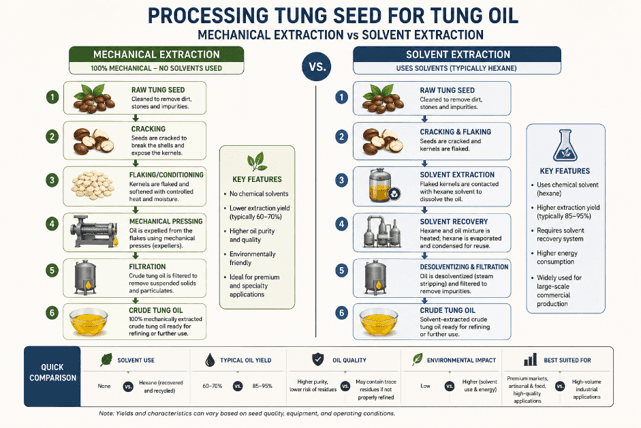
Tallahassee Tung Oil is grown, harvested and screw-pressed on our own farms along the Gulf Coast — never imported, never hexane-extracted, and dated so you know how fresh it is.