How D-Limonene AKA Citrus Solvent Is Made—And Why It’s Used To Thin Tung Oil
2 min read
If you’ve ever opened a bottle of tung oil thinned with citrus solvent and thought, “Wow, that smells way better than mineral spirits,” you’ve already met d-limonene. It’s the natural compound that gives oranges their fresh citrus scent—and it also happens to be a really effective, plant-based solvent for thinning tung oil. So, where does it come from and why does it work so well as a complement to tung oil?
Where D-Limonene Comes From
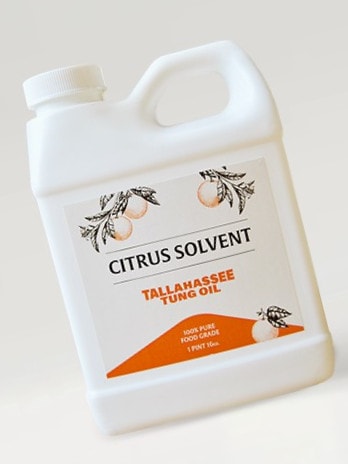
D-limonene, also known as citrus solvent, is made from citrus peels, most commonly orange peels. After oranges are squeezed for juice, the peels are left over. Instead of going to waste, those peels are collected and processed to extract citrus oil. Inside every orange peel there are tiny oil glands packed with aromatic compounds. Manufacturers release those oils using cold pressing or steam distillation. Cold pressing mechanically squeezes the peels to release the oil, while steam distillation uses heat and steam to vaporize the oils and then condense them back into liquid form. Once extracted, the oil is separated and refined. Since d-limonene makes up the majority of orange oil—often more than 90%—it doesn’t take much processing to end up with a high-purity citrus solvent that smells clean and fresh. Tallahassee Tung Oil only sells pure food-grade d-limonene, so you know it’s safe to use on cutting boards and other wood kitchen items that come into contact with food.
Why Citrus Solvent Works With Tung Oil
Tallahassee Tung Oil is a fantastic natural wood finish! D-limonene is a strong natural solvent, meaning it helps break down and thins tung oil without changing the chemistry. When you mix it with tung oil, it reduces viscosity, allowing the oil to more easily penetrate into the wood fibers instead of sitting on the surface.
Blending d-limonene with tung oil leads to:
- Easier application
- More even coverage
- Improved dry time
How It’s Frequently Used
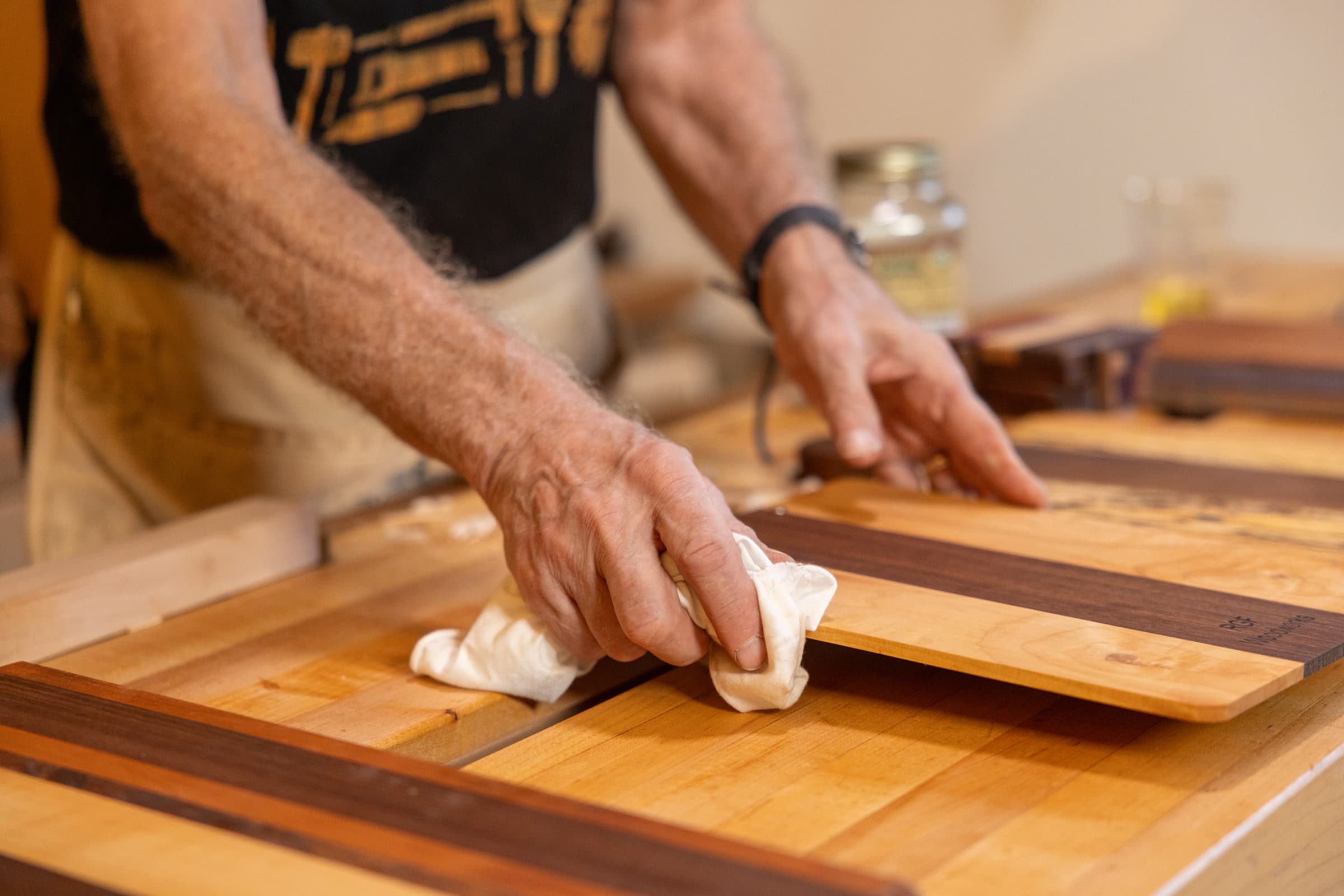
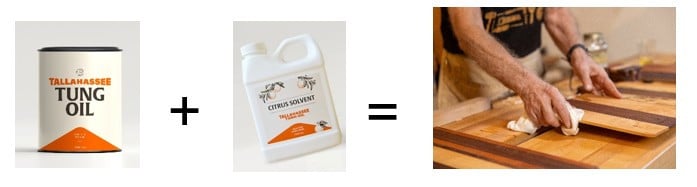
For woodworking and finishing, d-limonene is often mixed with tung oil in simple ratios—usually 1:1 for the first coat. This thinned mixture flows easily, wipes on smoothly, and spreads evenly across the surface. As additional coats are applied, many people gradually reduce the amount of d-limonene, allowing the tung oil to build and cure into a durable, water-resistant finish. The result is a natural finish that enhances wood grain without harsh chemicals.
A Safer Alternative to Petroleum Solvents
One of the biggest reasons people choose citrus solvent over mineral spirits or paint thinner is the experience. It’s derived from plants, renewable, and biodegradable—and it smells like citrus instead of chemicals. In the end, it’s pretty satisfying to know that something as simple as an orange peel can become a key ingredient in a high-quality wood finish. D-limonene takes leftover citrus waste, turns it into a powerful natural solvent, and helps Tallahassee Tung Oil do what it does best—protect and beautify wood, naturally.
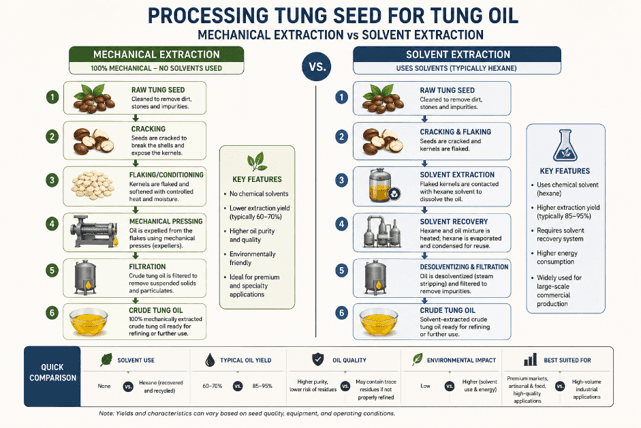
Tallahassee Tung Oil is grown, harvested and screw-pressed on our own farms along the Gulf Coast — never imported, never hexane-extracted, and dated so you know how fresh it is.