
About our oil
You believe in quality and craftsmanship. So do we.
Our family has spent years on the art and the science of growing tung trees and turning their fruit into an oil worth your labor.
Freshness matters
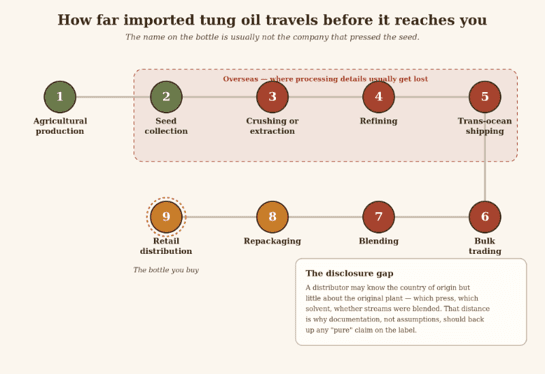
Most tung oil has crossed an ocean before you open it.
Because ours is fresh, it applies smoothly, dries evenly, lasts longer on your shelf, and mixes better with your own blend. Every can is labeled with its harvest date and processing date, and comes with a certificate of analysis from an independent laboratory alongside our signed guarantee of purity.
We grow it. We press it. We stand behind it.
Four things we can prove
- 01
Grown on our farm
Every batch starts with tung trees grown and harvested on our own farms along the Gulf Coast. Not bought on the bulk market. Not blended from four continents.
- 02
Screw-pressed for purity
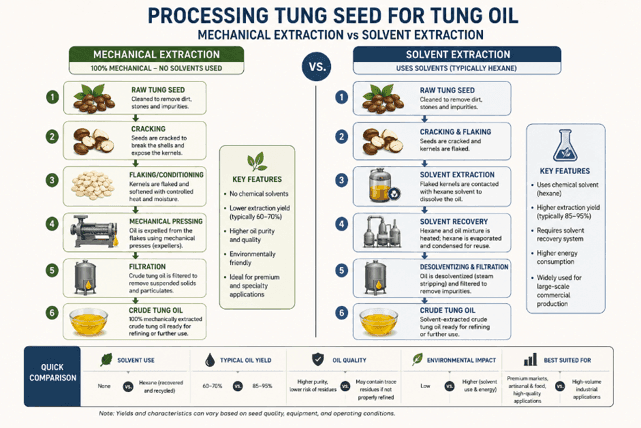
Ripe tung nuts are collected, prepped, and mechanically pressed. No hexane, no solvents, no chemical extraction at any stage.
- 03
Lab-verified
Every batch is backed by a certificate of analysis from an independent testing laboratory, referenced by the batch number on your container.
- 04
Dated and traceable
Every container carries its harvest date, its press date, and a signed guarantee of purity. You can tell how old your oil is by reading the label.
Certified September 3, 2026
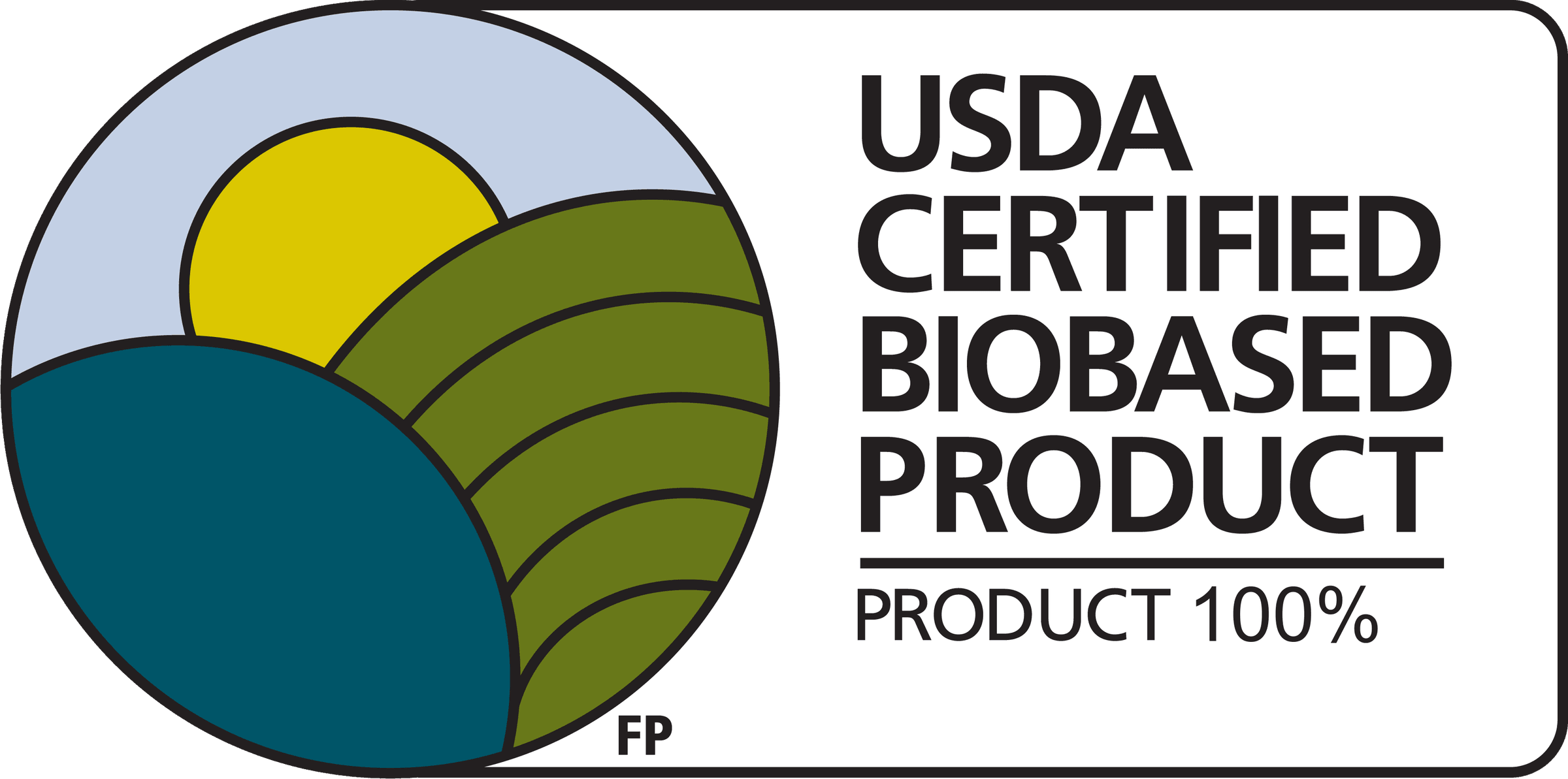
A USDA Certified Biobased Product, measured at 100%.
Tallahassee Tung Oil has earned the U.S. Department of Agriculture (USDA) Certified Biobased Product Label. To earn it, the oil was tested by an independent laboratory for the USDA BioPreferred® Program, which uses radiocarbon analysis to measure how much of a product comes from plants rather than from petroleum. Ours measured 100%.
For you, it is one more way to know that what is in the can is tung oil and nothing else: an oil thinned with petroleum distillates could not measure 100%. The letters FP on the label mean it also qualifies for federal purchasing preference.
See the certificate (PDF)About the USDA BioPreferred Program
From our orchard to your bench
Five stages, and nothing added at any of them
Grown
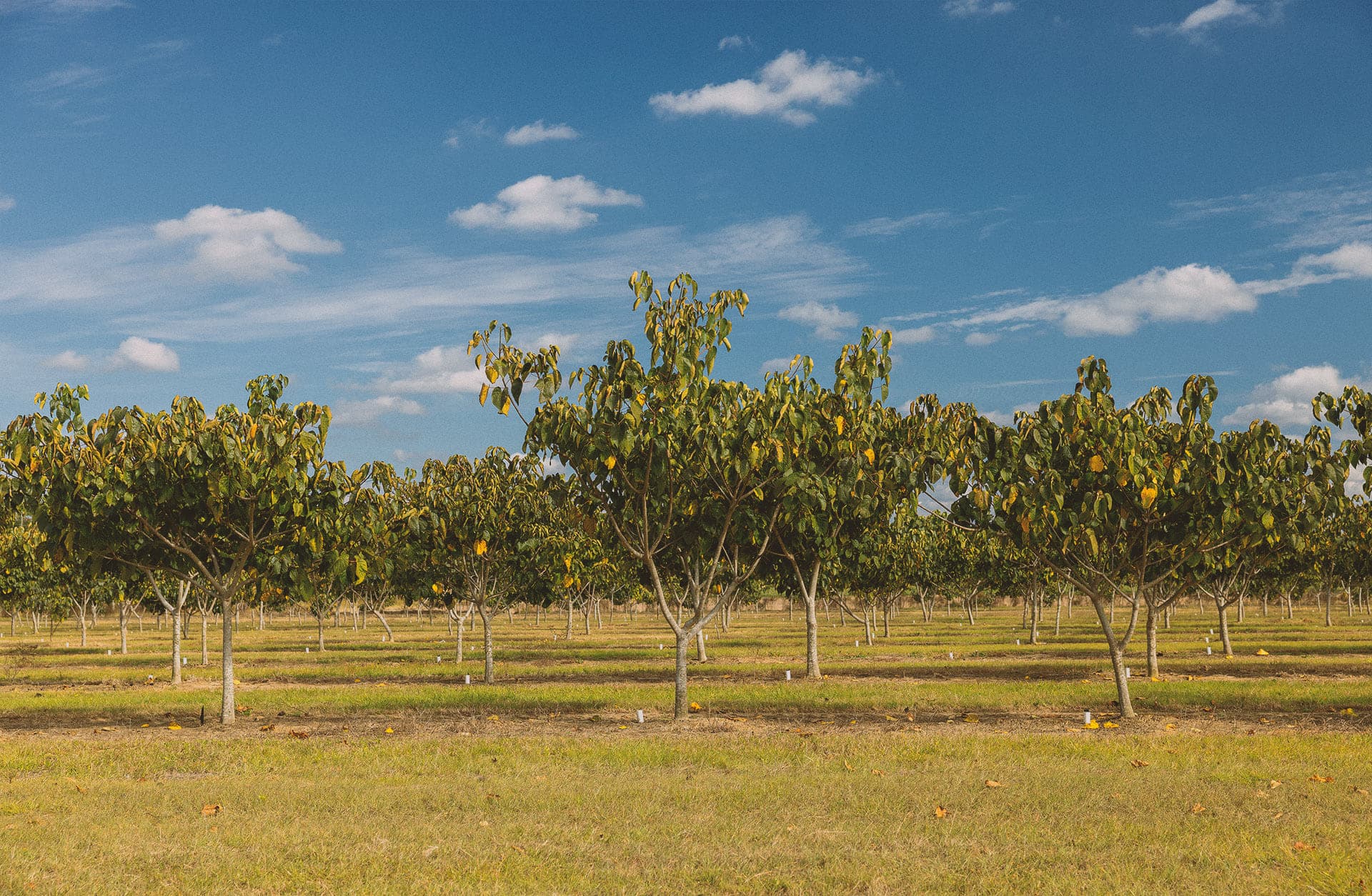
Tung trees in our own orchards along the Gulf Coast. We know how each orchard produces and what the season did to it.
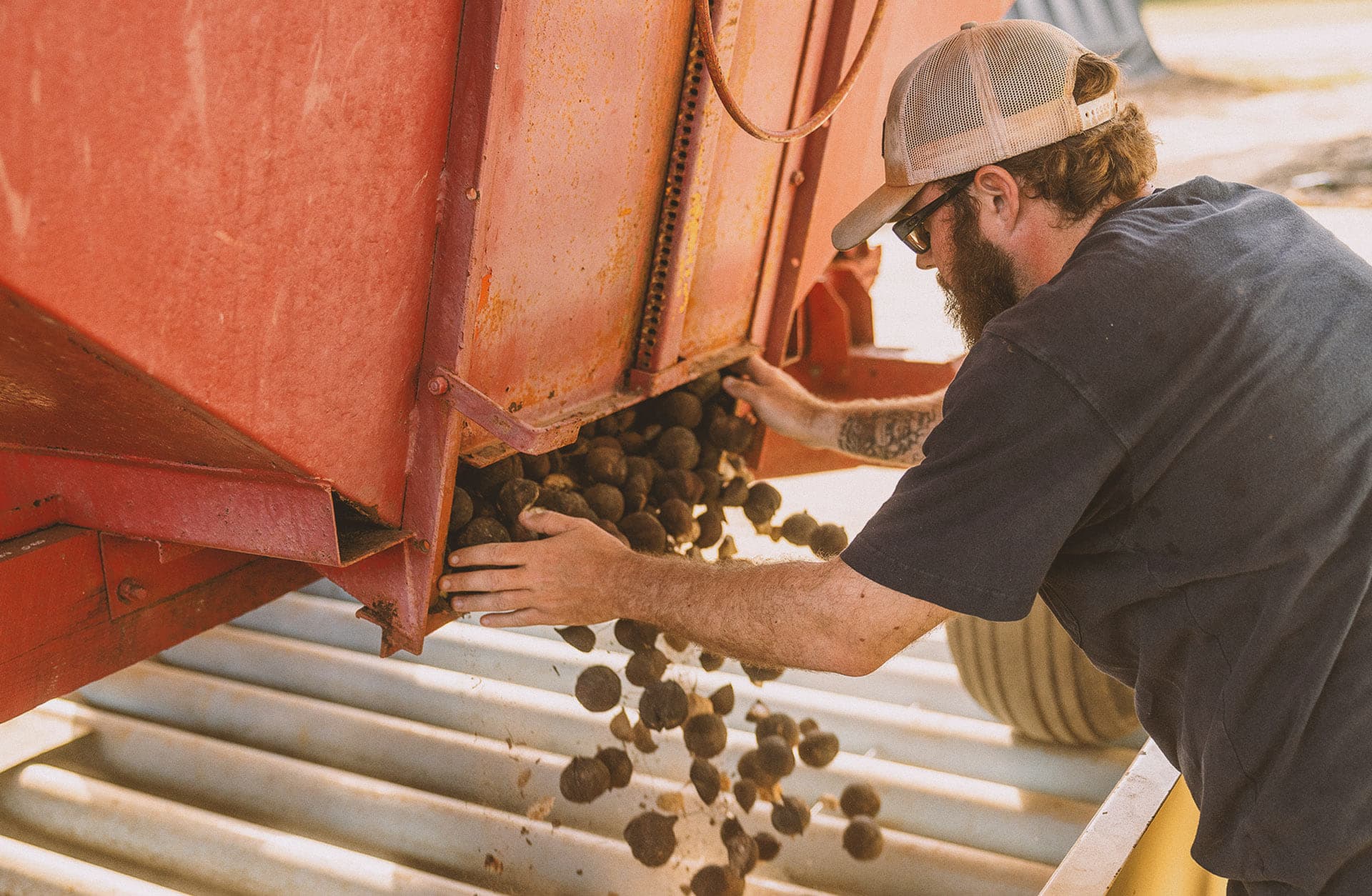
Harvested
Nuts are left to ripen and drop, then gathered and brought in — hulls, shells and all.
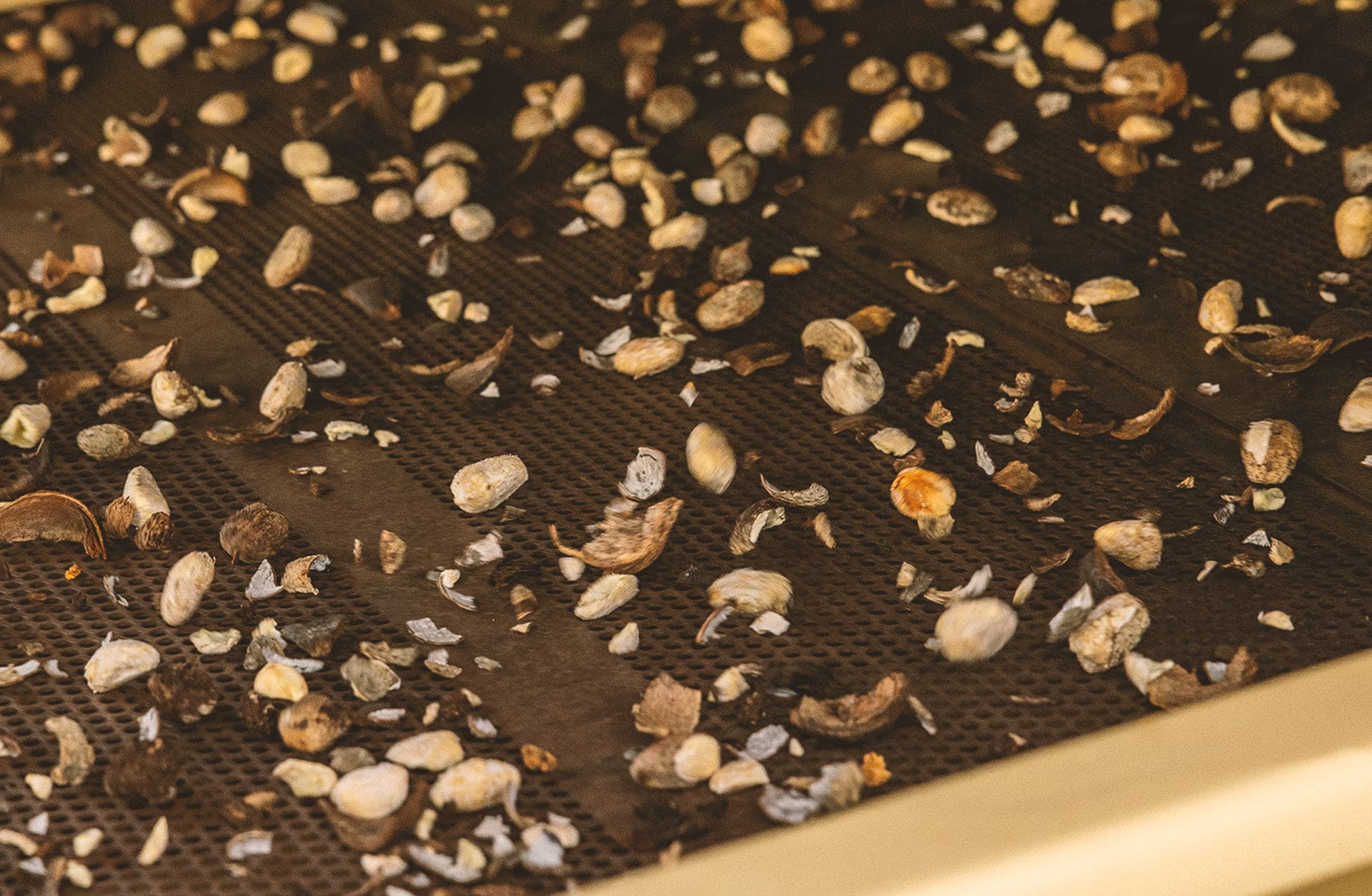
Cracked and sorted
Hulls come off, shells are cracked, and the kernels are separated out on the sorting deck.
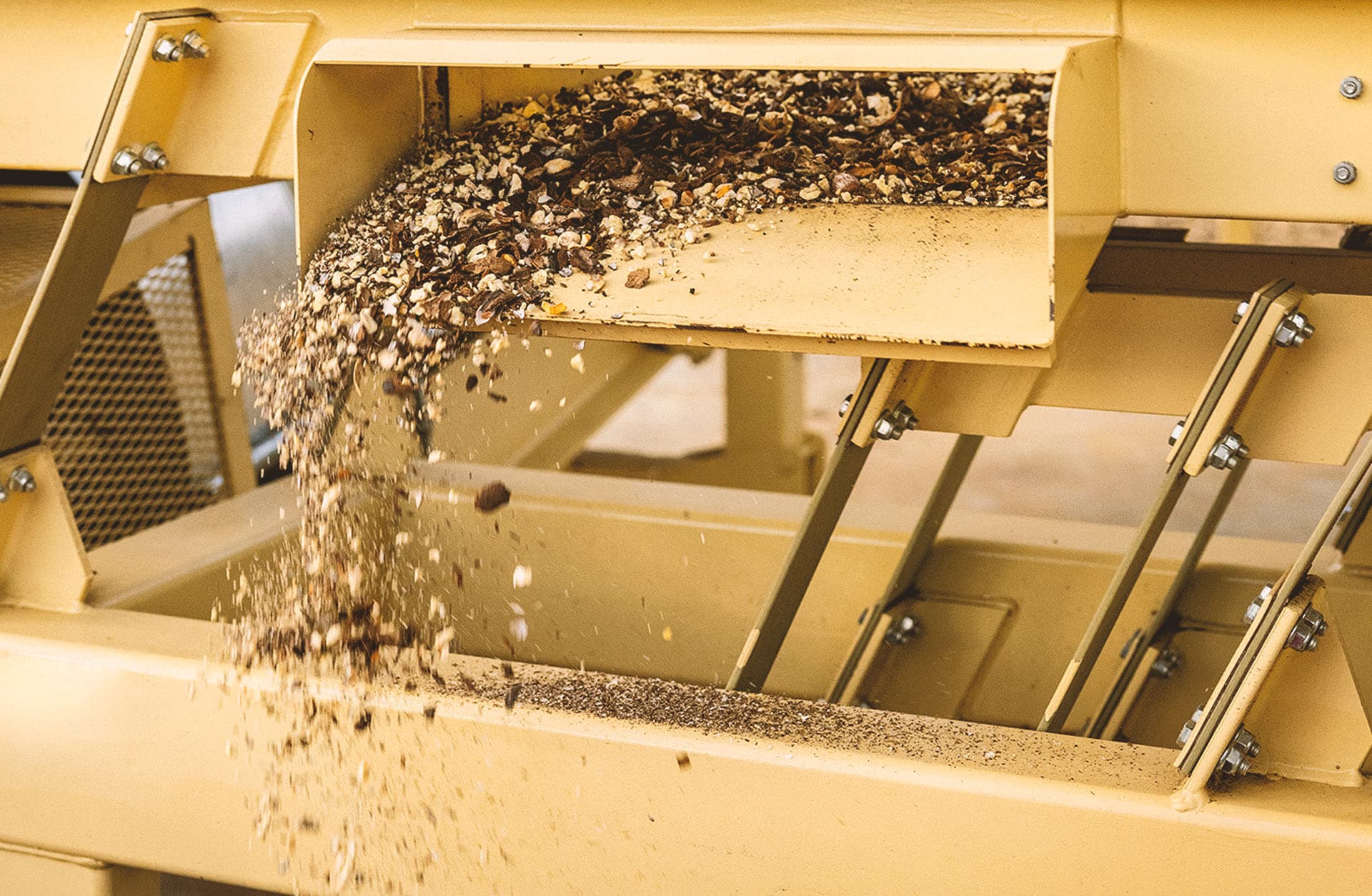
Screw-pressed
Kernels go through a mechanical screw press. No hexane, no solvent recovery, no blending of extracted streams.
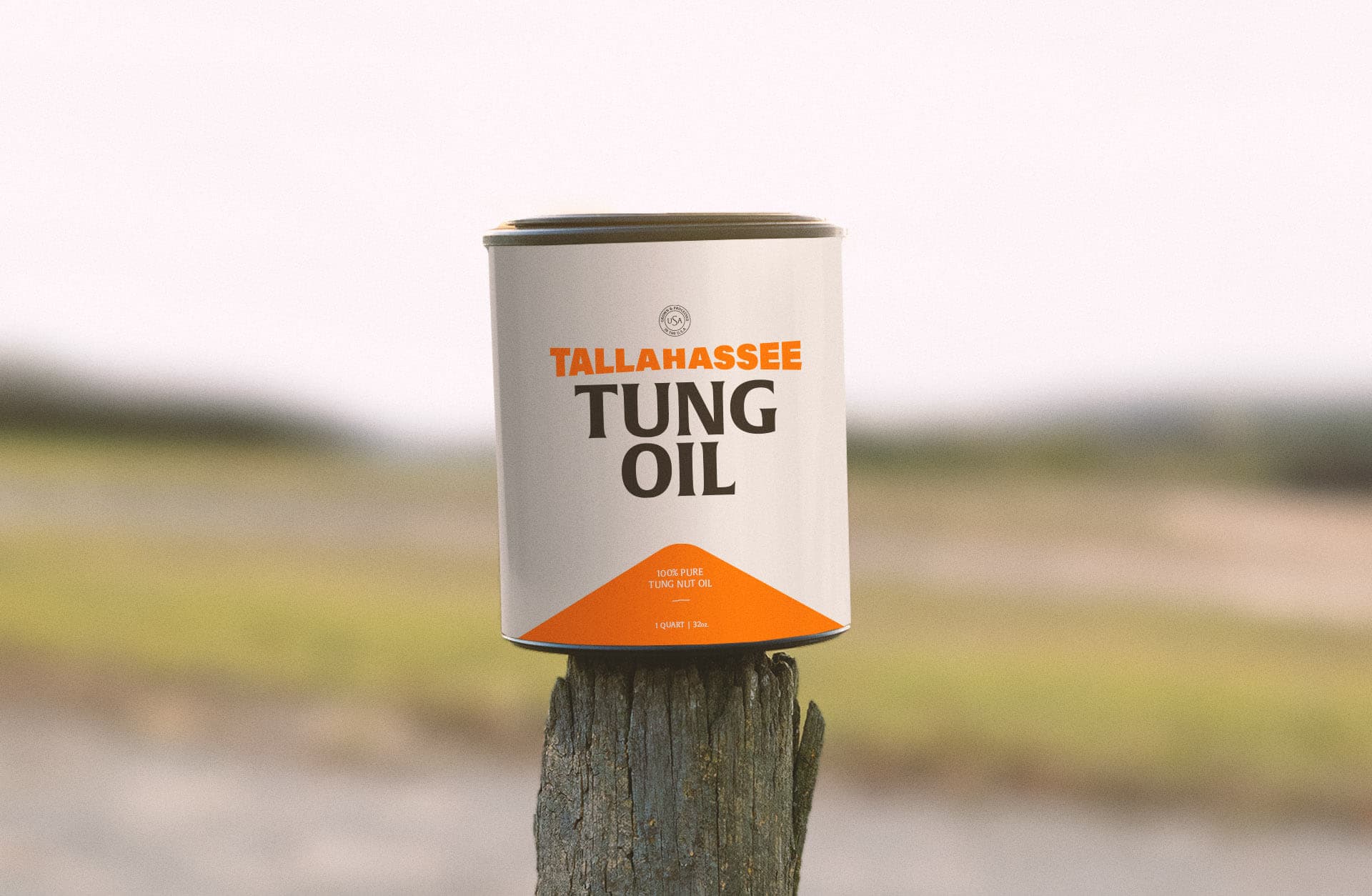
Tested and dated
A sample goes to an independent laboratory. The batch number, harvest date and press date go on the can.
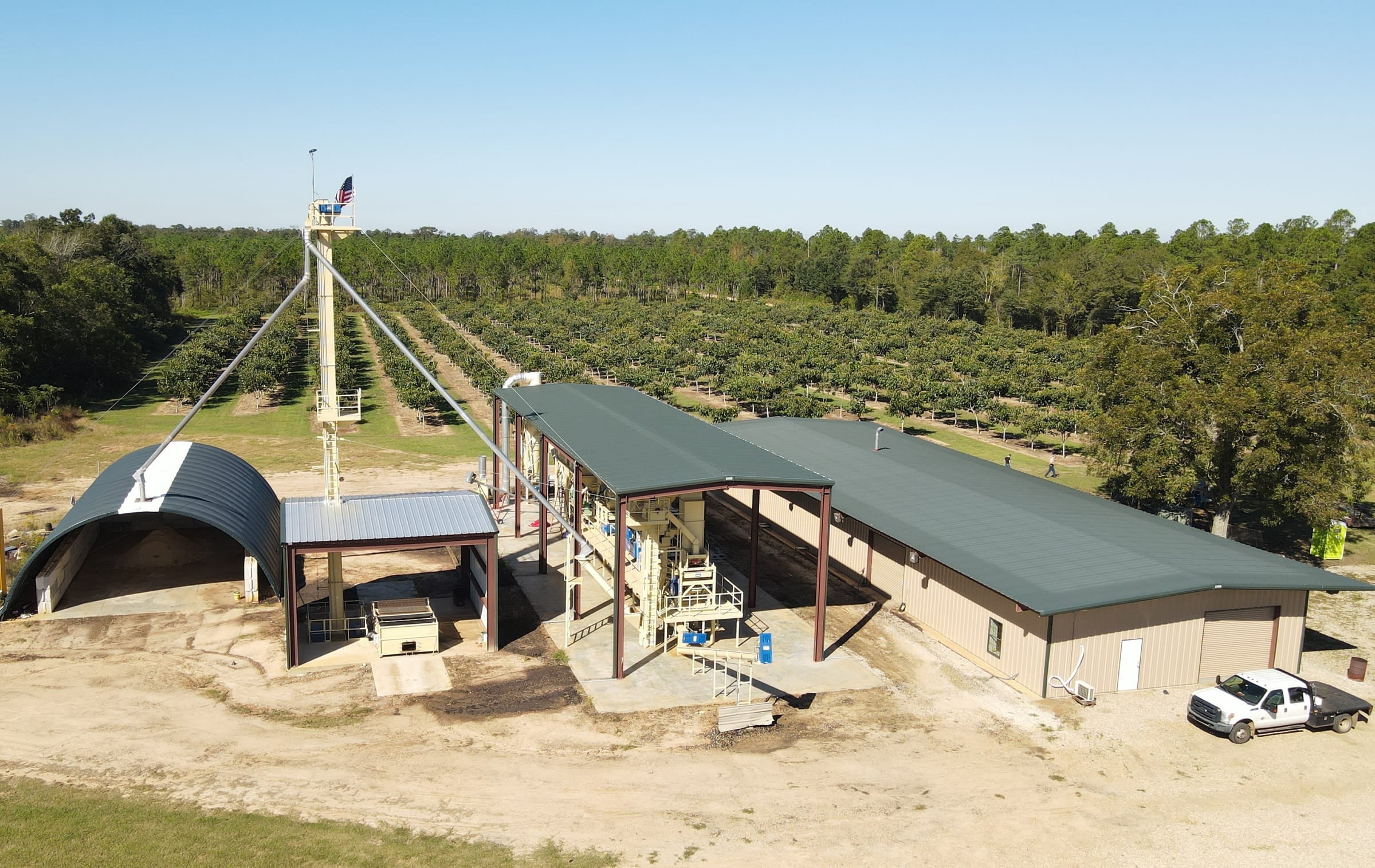
Our own mill
Harvest goes straight from our rows to our press.
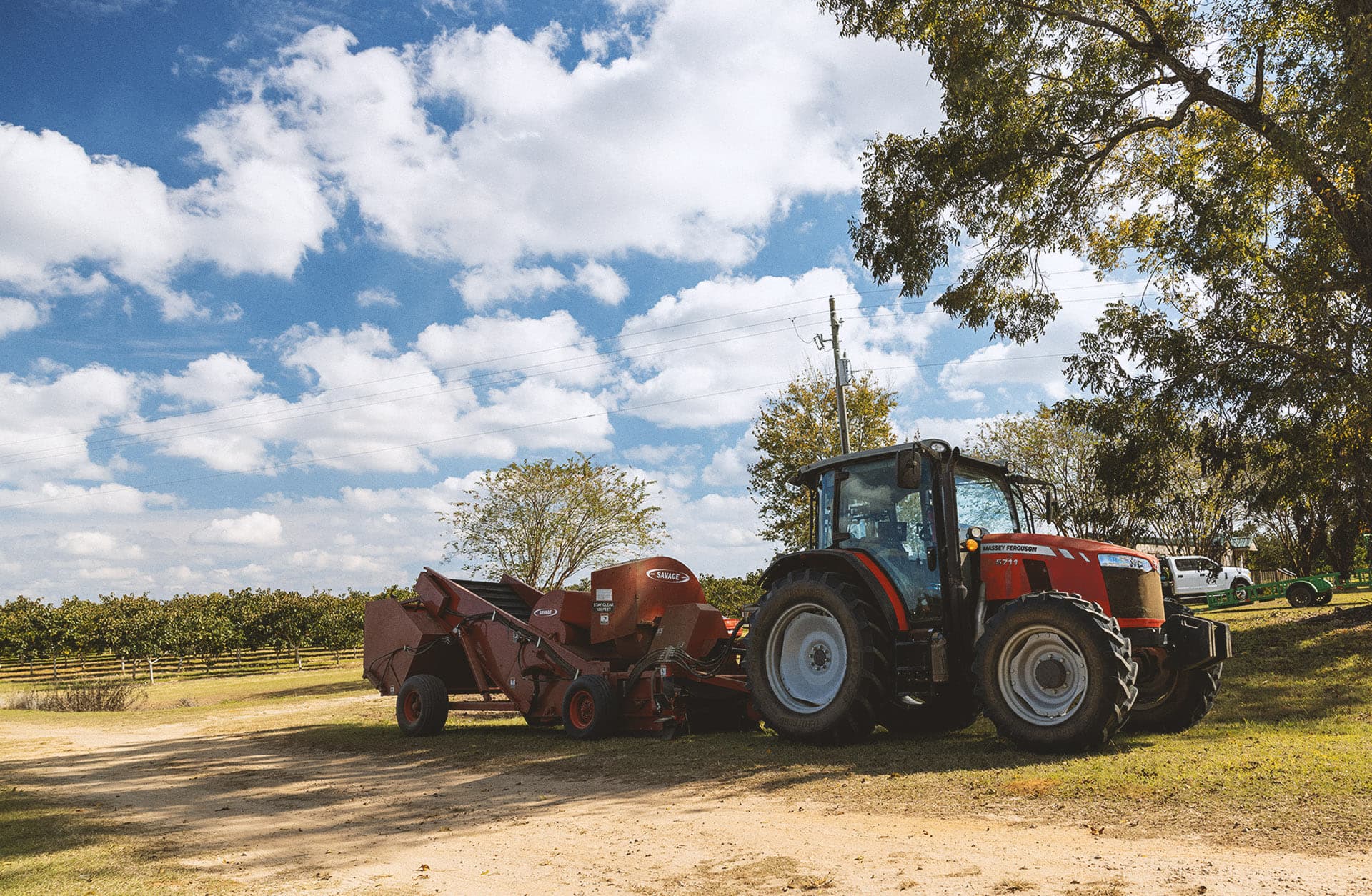
Tractor and harvester, waiting at the edge of the orchard. 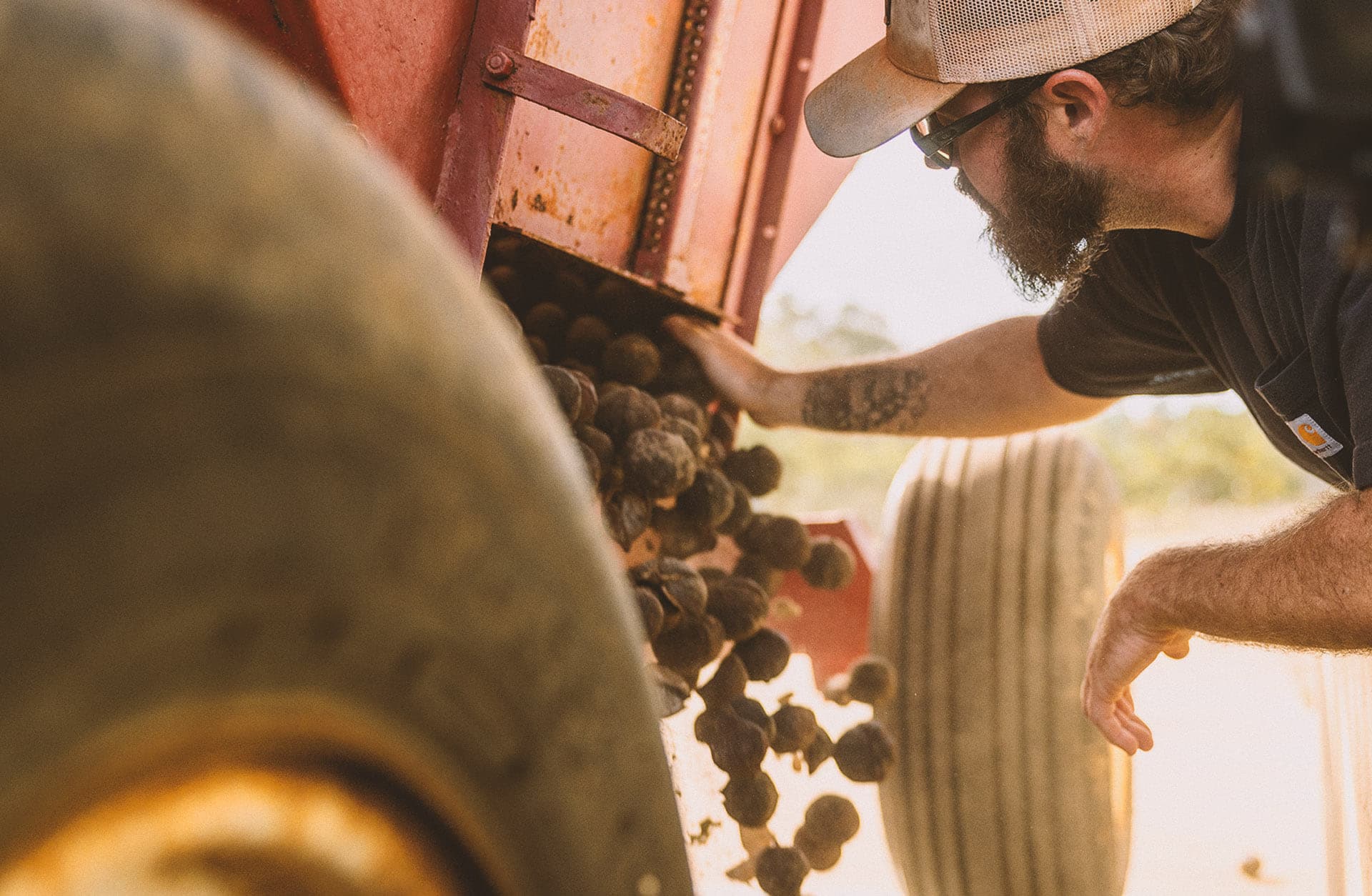
Nuts tumbling from the harvester gate. 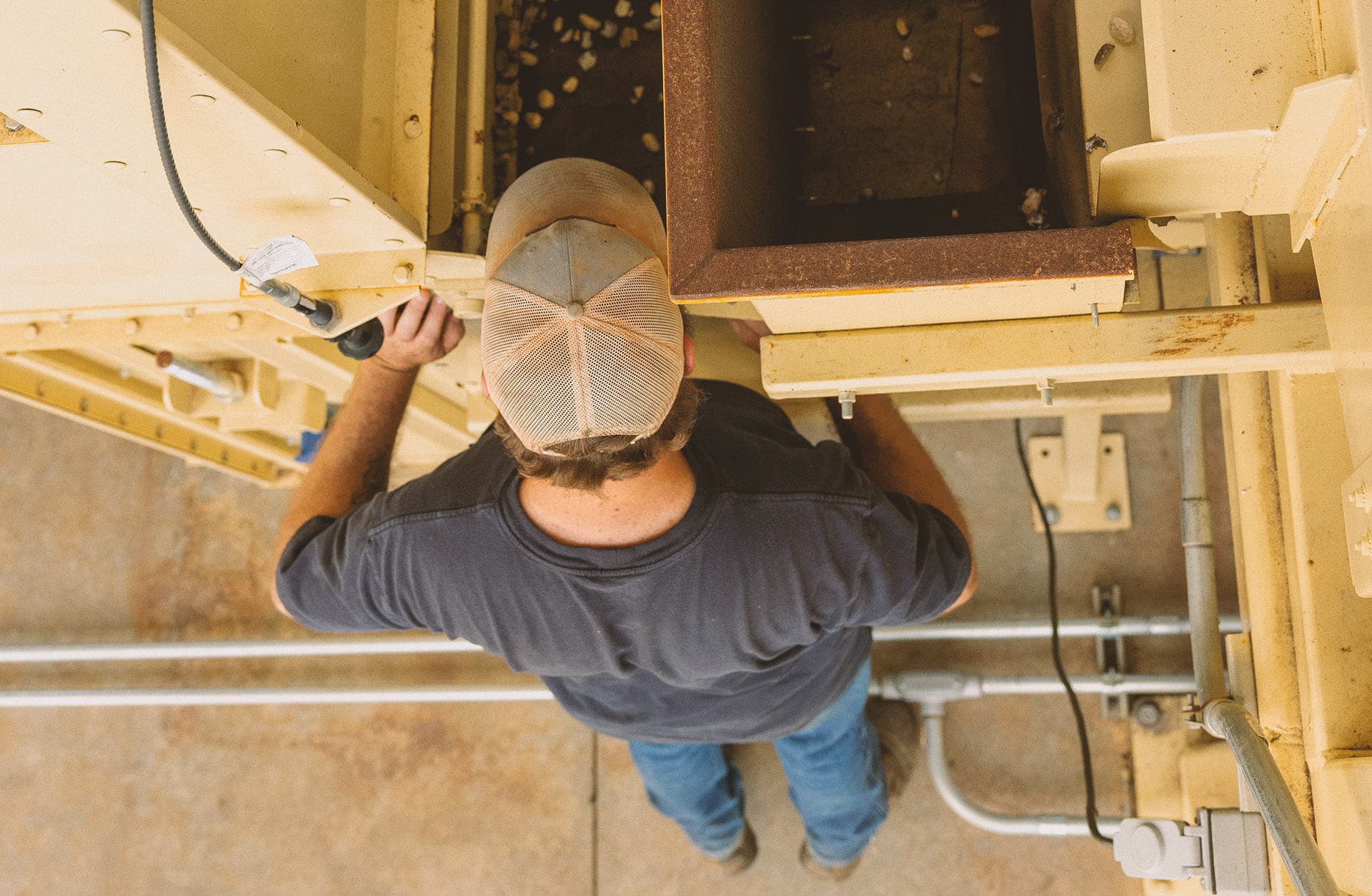
An operator at the mill, from above. 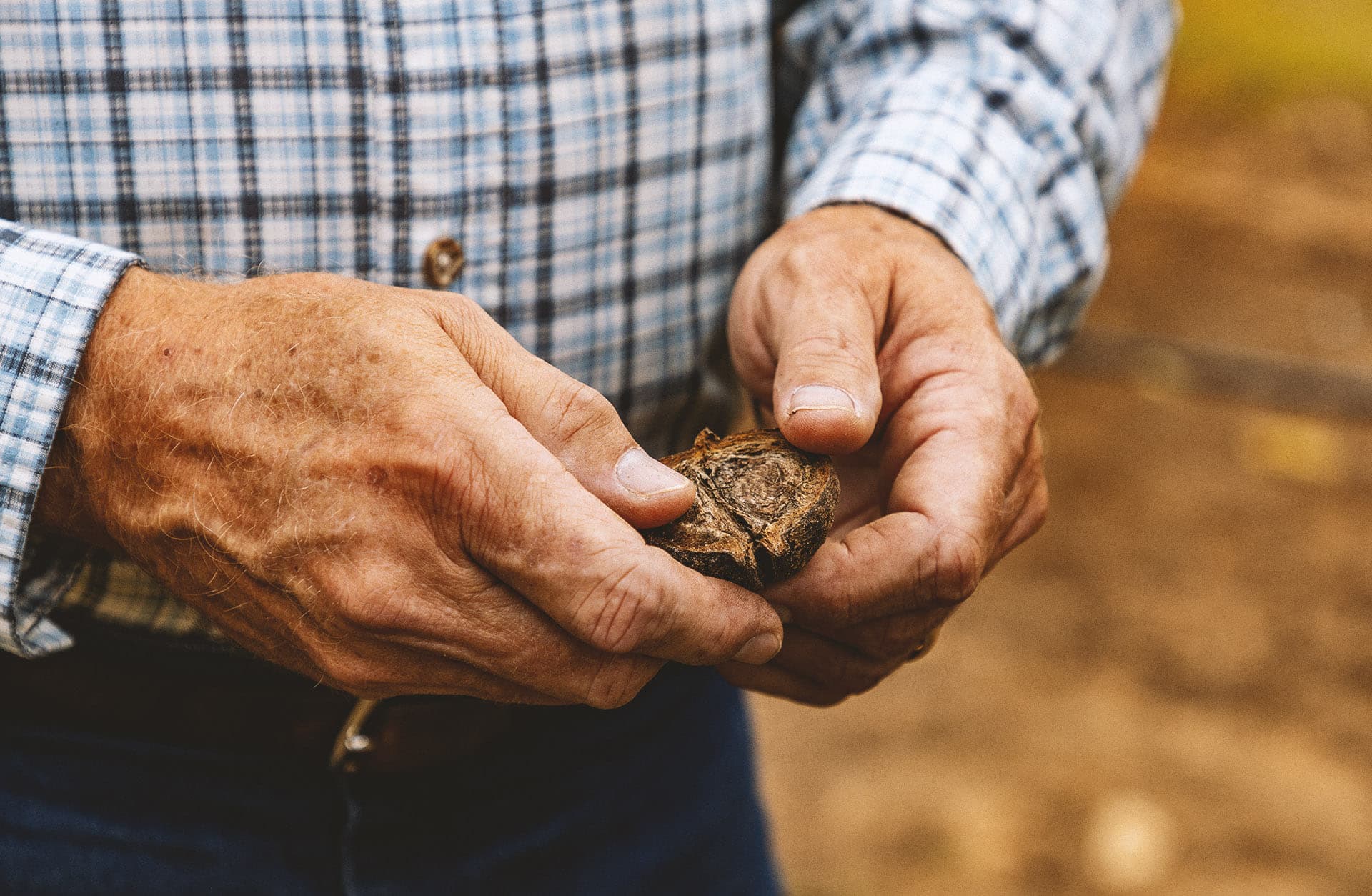
A cracked nut, opened by hand to check the kernel.
Uncompromised beauty and protection
It goes into the wood, not onto it.
Applying tung oil
How we do it
- 01
Sand and clean
Sand the surface to the smoothness you want — usually around 180 or 220 grit — and remove all the sanding dust.
- 02
Wipe on sparingly
Wipe on a 50/50 blend of tung oil and citrus solution with a lint-free cloth. Let it soak in for a few minutes, then rub vigorously with a clean cloth until no oil is standing on the surface. This matters: it is what gets the oil into the wood instead of leaving a sticky mess on top of it. On cutting boards and kitchen utensils, use our food-grade citrus solution.
- 03
Wait, then repeat
Apply the second coat after about 24 hours, the same 50/50 blend, the same way. How long you should actually wait depends on your temperature and humidity.
- 04
Build the finish
Three or four coats is usual. Tallahassee Tung Oil dries to the touch in four to five hours depending on your oil-to-solution ratio, and cures completely in two to three weeks when applied correctly.
- 05
Take the compliments
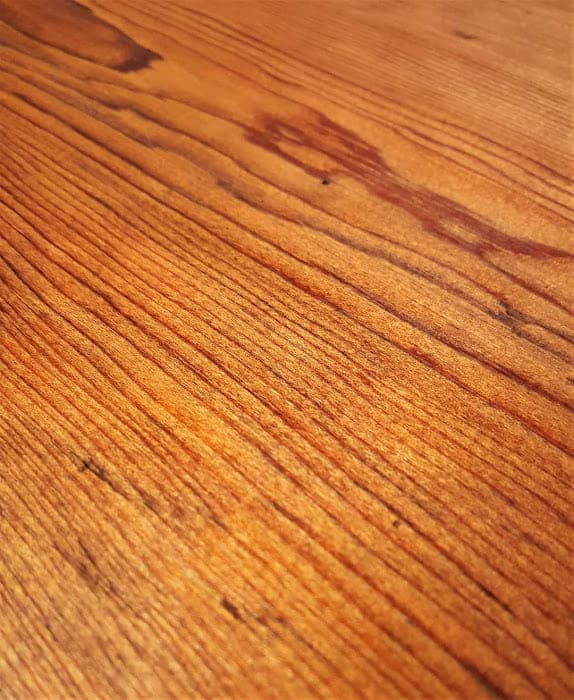
Enjoy how the finish pops the grain, and take some pride in making something that will last for generations.
When using any tung oil, follow general safety guidance — including how to store used rags.
The tung oil legacy
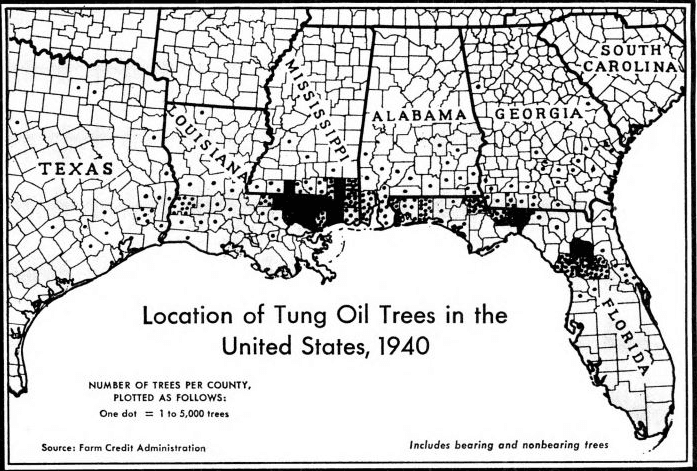
This was once a Gulf Coast industry.
Order soon — we have limited quantities.
We only sell what our own trees produce, so when a season runs out, it runs out.